

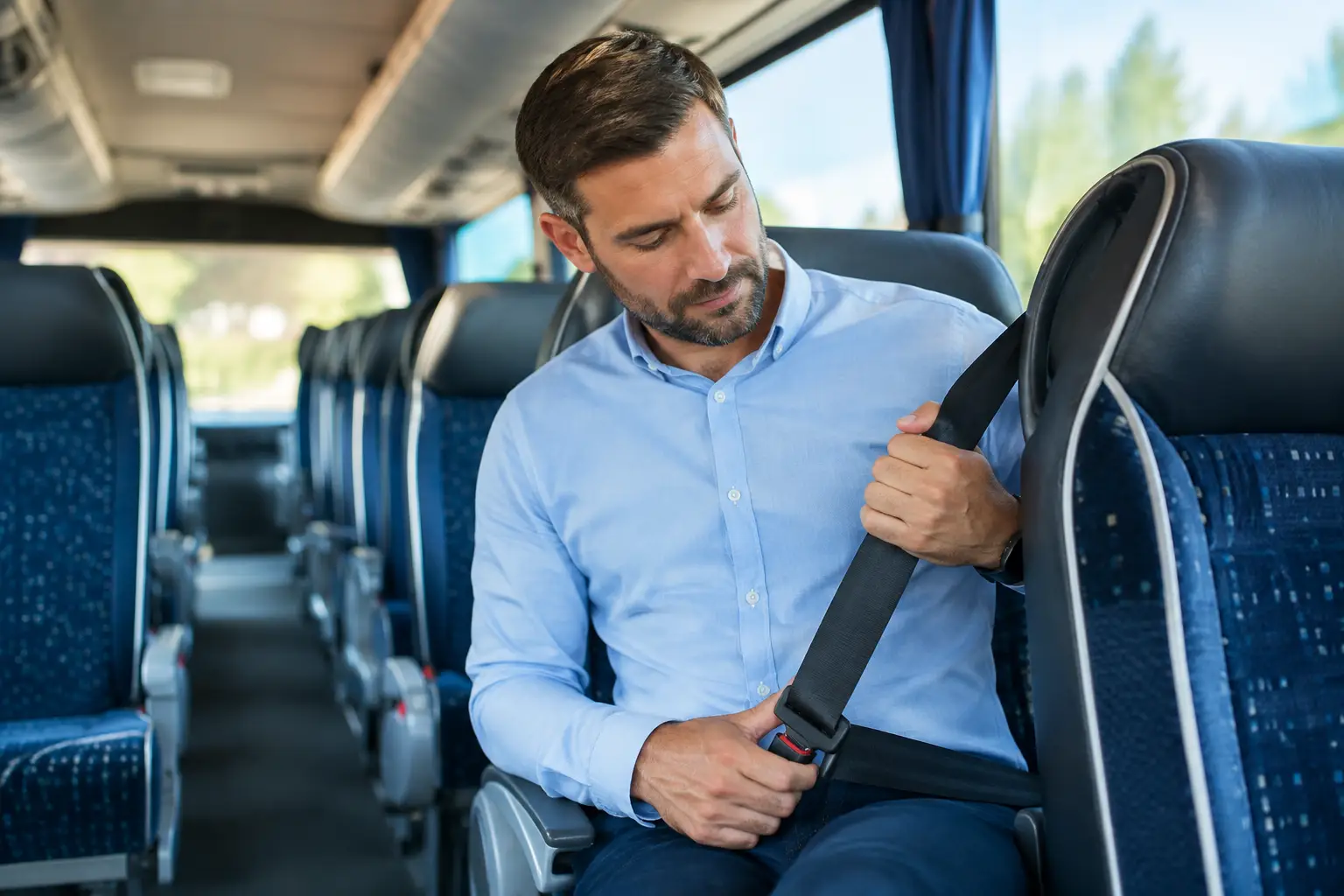
A coach can arrive on time, look immaculate and have plenty of room for every passenger, but coach seatbelts remain one of the most practical safety details a group organiser should confirm before travel. For a corporate transfer, school excursion, sporting fixture or wedding shuttle, knowing how passengers will be seated and restrained helps create a calmer, more carefully planned journey.
Seatbelts are not an optional detail to leave until the vehicle arrives. They affect passenger safety, boarding instructions, seating plans and the standard of care expected from a professional charter provider. The right questions early in the booking process make it easier to match your group with a suitable vehicle and travel with confidence.
Why coach seatbelts matter for group travel
On a coach, passengers may be travelling on motorways, regional roads or through busy urban traffic. Sudden braking, evasive manoeuvres and unexpected road conditions can occur even when a journey is professionally managed. A correctly worn seatbelt helps keep a passenger in their seat and reduces movement within the cabin.
For organisers, this is about more than meeting a checklist. It is about taking reasonable care of colleagues, students, guests or team members from pickup through to return. It also supports a more orderly journey. When passengers are seated and belted before departure, drivers can focus on the road rather than repeatedly managing movement through the aisle.
Modern charter coaches are commonly equipped with lap-sash seatbelts, which secure across the lap and shoulder. These provide a more secure restraint than a lap-only belt when used correctly. Vehicle configuration can differ, however, particularly across different coach sizes and fleet types, so it is sensible to confirm the restraint arrangement for the specific vehicle proposed for your booking.
What determines seatbelt requirements on a coach?
Seatbelt obligations can depend on factors such as the type of vehicle, its age, seating capacity and the service it is operating. Requirements may also differ between buses used for local route services and coaches used for longer-distance charter travel. Rather than making assumptions based on a vehicle’s appearance, organisers should ask their transport provider directly about the seatbelts fitted to the allocated coach.
An accredited operator should be able to explain the vehicle’s seating configuration, its passenger capacity and the safety procedures that apply to the journey. This conversation is especially worthwhile where your itinerary includes freeway travel, extended distances, children, older passengers or guests who may need additional assistance boarding and seating.
The practical rule is straightforward: book a vehicle that is appropriate for your trip, then ensure passengers understand how to use its safety features. A careful operator will help with both parts of that process.
Not every group has the same needs
A short transfer between a hotel and a conference venue has different planning needs from a full-day winery tour or a regional sports trip. On a brief urban journey, the priority may be efficient pickups and clear boarding. For longer travel, comfort, luggage space, reclining seats, air conditioning and seatbelts all become more significant considerations.
School and youth groups require particular attention. Coordinators should provide clear instructions before departure, make sure supervision is appropriate for the group and allow enough time for passengers to board without rushing. Where seatbelts are fitted, students should be reminded to fasten them before the coach moves.
For wedding parties and private functions, it is equally useful to nominate a contact person who can assist the driver with passenger numbers and departure timing. This keeps the return journey organised, particularly when pickup points are busy or access is limited.
Questions to ask when booking coach seatbelts
A quality charter booking starts with accurate information. Let the operator know how many people are travelling, the age range of passengers, the route, departure and return times, and whether luggage, mobility needs or multiple pickups are involved. These details help determine the most suitable vehicle rather than simply the largest available coach.
When discussing coach seatbelts, ask whether seatbelts are fitted throughout the passenger cabin and what style of belt is installed. You can also ask whether the proposed seating capacity allows every traveller to have their own seat. No passenger should be expected to share a seat, stand in the aisle or sit where a seatbelt cannot be used as intended.
It is worth confirming the operator’s pre-departure process as well. Professional drivers will generally allow passengers to board safely, check that doors and luggage areas are secure, and depart only when the vehicle is ready. For larger groups, the organiser can support this by completing a headcount before leaving each location.
If your trip has a tight schedule, resist the temptation to compress boarding time. A few extra minutes at the start of a journey can prevent late arrivals, misplaced belongings and passengers settling into seats after the coach has started moving.
Helping passengers use seatbelts correctly
A seatbelt only provides its intended protection when it is worn properly. The lap portion should sit low across the hips, while the sash runs across the chest and shoulder, not under the arm or behind the back. Belts should not be twisted, and bulky items should be stored rather than held beneath the belt.
Group organisers do not need to deliver a lengthy safety briefing, but a simple reminder is valuable. Ask passengers to remain seated while the coach is moving, keep aisles clear and fasten their seatbelts where provided. For young travellers, staff or adult supervisors should reinforce these instructions in a calm, consistent way.
Passengers should also avoid unfastening their belt before the coach has come to a complete stop. This is particularly relevant at event venues, airports and city drop-off zones, where vehicles may need to wait briefly for a safe place to pull in.
Comfort and safety work together
Some passengers see coach seatbelts as a compromise on comfort, especially on a longer journey. In reality, a well-appointed coach should make both priorities achievable. Supportive reclining seats, climate control, tinted windows and a smooth ride all contribute to passenger comfort, while a correctly fitted seatbelt provides reassurance when road conditions change.
The balance comes down to selecting the right vehicle and allowing enough space for your group. A coach that is too small can make any trip feel crowded, while an appropriately configured luxury coach gives passengers room to settle in without sacrificing careful safety standards.
Building seatbelt checks into your travel plan
The simplest approach is to include seatbelts in your initial transport brief, alongside passenger numbers, dates, route and luggage requirements. Do not treat it as a last-minute request. Early confirmation gives your provider the best opportunity to allocate a suitable vehicle and advise on any practical considerations.
Before the day, share a short travel note with passengers covering pickup time, meeting point, luggage expectations and the need to remain seated with seatbelts fastened where fitted. For recurring corporate travel or regular team fixtures, make this part of your standard travel communication so expectations are clear every time.
On the day, appoint one organiser to liaise with the driver. They can confirm the headcount, identify any passenger requiring assistance and communicate changes promptly. This small step reduces confusion and supports a punctual, worry-free departure.
A dependable coach service should make safety planning feel straightforward, not complicated. At Bus Hire Sydney, careful vehicle matching, experienced drivers and clear charter planning help organisers provide a comfortable journey with the reassurance their group deserves.