

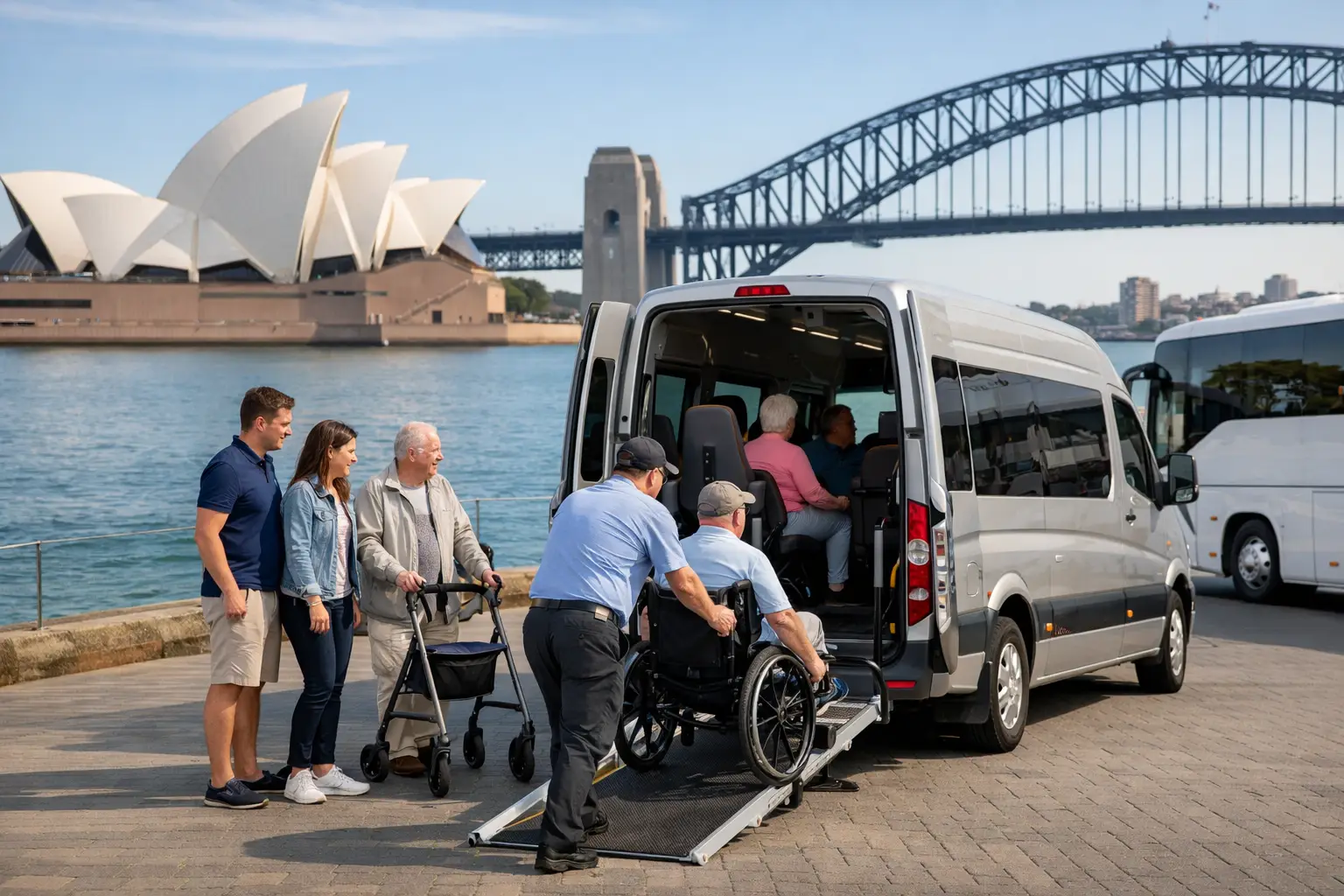
A group itinerary can fall apart quickly when access needs are treated as an afterthought. The best accessible group transport options account for every passenger before the vehicle arrives – from boarding and seating to luggage, rest stops and the route at each end of the journey.
For office managers, event planners, school coordinators and families, accessible travel is not one standard vehicle or a simple tick-box. It is a carefully planned service that gives all passengers a safe, comfortable and dignified way to travel together. The right arrangement depends on the number of people travelling, their individual requirements, the venue access and the timing of the day.
What accessible group transport should include
Accessibility can mean different things for different groups. A passenger using a wheelchair may need a vehicle with a suitable lift or ramp and approved wheelchair securement. Someone with limited mobility may be able to use steps but benefit from lower entry, handrails, nearby seating and extra boarding time. Other passengers may need clear instructions, a calm travel environment, room for mobility aids or a driver who understands the importance of patience and clear communication.
The key is to describe requirements early and specifically. Rather than asking only whether a coach is “accessible”, confirm how each passenger will board, where they will sit, whether any equipment is travelling with them and whether the destination has a practical set-down point. This avoids assumptions that can create delays or discomfort on the day.
A dependable charter provider should treat these details as part of the transport plan, not as an inconvenient addition. Careful scheduling, an appropriate vehicle and professional driver support make a meaningful difference, particularly for medical appointments, formal events, airport transfers and full-day excursions.
Accessible group transport options by group size
The vehicle itself should suit both the passenger count and the access plan. Booking a larger vehicle than required can be sensible if it creates room for mobility equipment, carers, luggage or easier movement through the cabin. Conversely, a smaller vehicle may be more practical where streets, driveways or venue loading zones are tight.
Minibuses for smaller groups and local transfers
A minibus can work well for smaller groups travelling to a meeting, family occasion, local attraction or airport. It may be a practical choice where the group includes a few passengers with mobility considerations but does not require a full-size coach.
Before confirming, check the step height, handrail arrangement, door width, seating layout and storage space. If a folding wheelchair, walking frame or other aid is coming along, its dimensions and weight should be provided in advance. A compact vehicle can be convenient, but only when it offers sufficient room for passengers to board and travel comfortably.
Coaches for larger groups and longer journeys
For larger groups, a coach gives organisers more capacity to keep everyone together. This is particularly useful for conferences, sporting fixtures, weddings, religious gatherings, production transport and regional day trips. Modern coach features such as air conditioning, reclining seats, tinted windows, curtains and PA systems can also improve passenger comfort over a longer journey.
Not every coach configuration is suitable for every mobility requirement. If wheelchair travel is involved, verify the exact accessible configuration available for the booking rather than relying on a general vehicle description. Confirming this well ahead of time gives the transport provider the best opportunity to allocate the right vehicle and build realistic boarding time into the schedule.
Plan the whole journey, not only the drive
A comfortable ride begins at the kerb. Pick-up and destination conditions can be just as important as the vehicle, especially in busy Sydney locations where loading zones, footpath widths, traffic restrictions and venue entrances vary considerably.
Choose a pick-up point with enough space for safe boarding and avoid locations that require passengers to cross multiple lanes or navigate uneven surfaces. For major venues, hotels, airports and event centres, ask where coaches are permitted to set down and collect passengers. The closest entrance is not always the most practical or accessible one.
Allow additional time at both ends of the trip. A tight run sheet may work for a group of agile commuters, but it is rarely appropriate where passengers need assistance, use mobility aids or simply need more time to settle safely. Adding ten to fifteen minutes around key transfers can prevent unnecessary pressure and support punctuality for the rest of the group.
For longer trips, plan rest breaks around accessible facilities rather than selecting stops only for their driving distance. Check the availability of accessible toilets, level paths, seating and a safe area for the coach to park. This is especially worthwhile for winery tours, regional events and tours with older passengers.
Questions to ask when booking accessible transport
A clear briefing produces a better service. When requesting a quote, give passenger numbers alongside the number of people who use wheelchairs, walkers or other mobility aids. Explain whether passengers can transfer into a standard seat, whether carers will travel and how much luggage or equipment needs to be carried.
It also helps to provide the full timetable: pick-up time, destination, required arrival time, return time and any intermediate stops. If timings are fixed for a flight, ceremony, match or performance call, say so. The transport plan can then include appropriate contingency for traffic, loading and boarding.
Ask practical questions about the proposed vehicle. Is it configured to meet the group’s stated access needs? What is the boarding process? Can mobility equipment be safely accommodated? Are there any site limitations at the pick-up or destination? A professional operator will answer directly and identify issues before the day of travel.
Where a passenger has sensory, communication or medical considerations, share only the information necessary to make the journey safe and comfortable. For example, organisers may request a quieter boarding process, simple driver instructions or seating close to the front. Respectful planning is often more valuable than complicated arrangements.
Safety, comfort and driver experience matter
Accessible travel should never require passengers to compromise on safety or comfort. An accredited operator, well-maintained vehicle and experienced driver provide reassurance when a group is travelling for an important occasion or on a demanding schedule.
Drivers play an essential role. They manage safe set-down points, help maintain an orderly boarding process and keep the journey moving according to the agreed plan. For groups with varied needs, a calm and professional approach helps everyone feel included rather than hurried.
Comfort also supports accessibility. Air conditioning is valuable in warmer weather, especially for passengers who may find heat difficult. Supportive seating, a smooth route and sensible break planning reduce fatigue. On a coach journey, a PA system can assist organisers with clear announcements about stops, return times and changes to the itinerary.
Bus Hire Sydney plans charter services around group size, trip purpose, timing and vehicle preference, making it easier for organisers to raise access requirements at the enquiry stage. The earlier those details are shared, the more carefully the travel arrangement can be tailored.
When a single vehicle may not be the right answer
Keeping a group together is usually the simplest option, but it is not always the safest or most practical choice. A venue with restricted access, a very large amount of equipment or significantly different passenger needs may call for a different arrangement. In some cases, staggered pick-ups, separate luggage transport or more than one suitable vehicle can make the day easier for everyone.
This is not a failure of planning. It is good planning responding to real conditions. The objective is not to force every passenger into one standard arrangement; it is to create a reliable journey that preserves dignity, safety and comfort from departure to return.
Accessible transport works best when organisers make it part of the first conversation, alongside dates and passenger numbers. With the right details in place, group travel can feel organised, comfortable and worry-free for every person on board.