

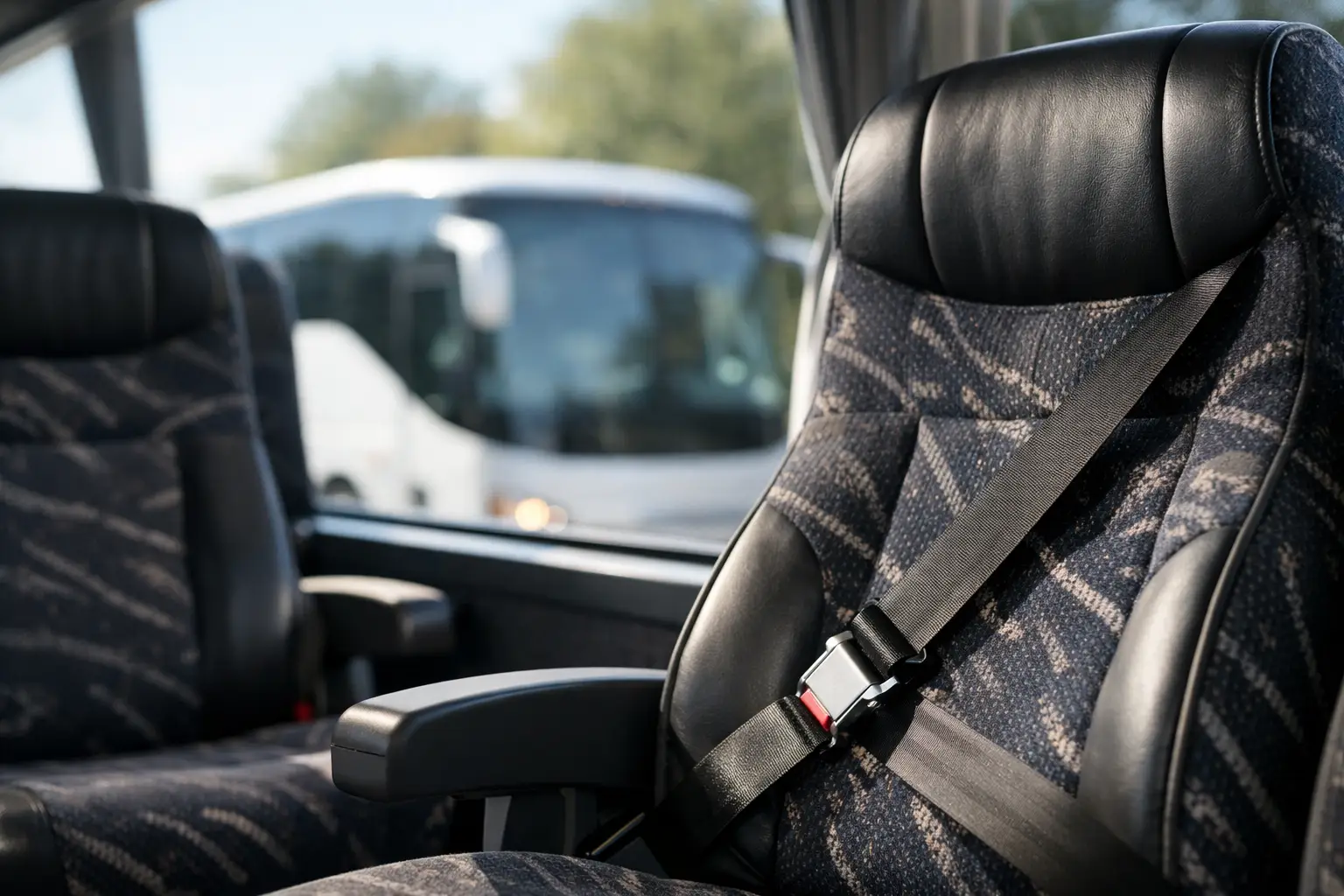
A wedding schedule, airport transfer or corporate off-site can involve dozens of moving parts, but passenger safety should not be left to assumption. Do charter buses have seatbelts? Often, yes – particularly modern coaches and minibuses used for longer-distance group travel – but the answer depends on the vehicle’s design, age, seating configuration and intended use.
For group organisers, the practical step is simple: advise your transport provider that seatbelts are a requirement for your group and confirm the vehicle allocated to your booking. This is especially worthwhile when transporting children, sporting teams, interstate visitors or guests travelling on motorways and regional roads.
Do charter buses have seatbelts in Australia?
Many charter coaches operating in Australia are fitted with seatbelts, commonly three-point lap-sash belts or lap belts, at passenger seats. These vehicles are generally designed for seated travel and are regularly used for airport transfers, corporate movements, weddings, tours, sporting fixtures and longer coach journeys.
However, not every bus is built in the same way. A large route-service bus designed for frequent stops and standing passengers may not have seatbelts at every seat. Its purpose is different from that of a dedicated coach. Similarly, older vehicles and particular seating layouts can differ from newer luxury coaches, even where both are legally permitted to operate.
Australian vehicle standards have changed over time, so the presence and type of seatbelt can vary by vehicle category and date of manufacture. That is why a general answer is useful, but confirmation for your actual charter is better. A professional operator should be able to explain whether the proposed vehicle has seatbelts, what type they are and whether every passenger seat is fitted.
Why coaches and route buses are different
The word “bus” covers a wide range of vehicles. For a group booking, it helps to distinguish between a coach, a minibus and an urban-style bus.
A coach is typically intended for longer journeys where all passengers are seated. It may feature reclining seats, luggage storage, air conditioning, tinted windows, curtains and an onboard PA system. Because the vehicle is planned around seated comfort, seatbelts are commonly part of the passenger setup.
A minibus is usually used for smaller groups, executive transfers and shuttle-style travel. Many modern minibuses have seatbelts for each passenger, though capacity and luggage needs should still be checked carefully. A vehicle that suits 20 people travelling light may not be the right fit for 20 people with airport luggage.
An urban or commuter-style bus is designed around short, frequent trips. It may include standing space, handrails and doors arranged for quick boarding. This can be a practical solution for certain local transport tasks, but it is not automatically the best choice for a group that specifically needs a seatbelt at every seat.
The key point is that seatbelts are connected to how the vehicle will be used, not simply what it is called.
When seatbelts matter most for a charter booking
Seatbelts are a sensible priority for any journey, but they deserve particular attention where the trip involves higher-speed roads, extended travel times or passengers who may need extra reassurance.
For airport transfers, a seatbelt-equipped coach or minibus gives travellers a more settled journey after a flight or before an early departure. For corporate groups, it supports a professional duty of care while allowing staff to arrive together and on schedule. For weddings and private functions, it provides organisers with the confidence that guests are travelling in a carefully selected vehicle rather than being split between cars.
School and youth travel also requires thorough planning. Coordinators should discuss seatbelt availability, supervision arrangements, pickup points, passenger numbers and any equipment or bag requirements well before departure. The same careful approach applies to sports teams carrying uniforms and gear, production crews moving between locations, and community groups with older passengers or people with mobility needs.
A seatbelt alone is not the whole safety picture. The experience of the driver, vehicle maintenance, realistic journey timing, safe pickup locations and clear passenger communication all contribute to a worry-free charter.
What passengers should do when belts are fitted
If a seatbelt is fitted to a passenger seat, it should be worn correctly for the duration of the journey. The belt should sit low across the hips, with the shoulder section crossing the centre of the chest where a lap-sash belt is provided. It should not be tucked behind the back or placed under an arm.
Before the vehicle departs, the driver may provide a safety briefing. This can cover seatbelts, emergency exits, luggage storage and expectations while the vehicle is moving. Group leaders can help by giving passengers a quick reminder before boarding, particularly when managing a large group on a tight timetable.
Passengers should also remain seated when the coach is moving unless there is a genuine need to move about. Keeping aisles clear matters just as much as fastening a belt. Bags, sports equipment and loose items should be placed in the luggage area or stowed securely so they do not become a hazard during braking or turning.
Questions to ask before you book
The easiest way to avoid uncertainty is to make seatbelts part of the initial charter brief. Rather than asking only for a vehicle capacity, provide your full trip requirements: passenger numbers, travel date, pickup and return times, destinations, luggage, accessibility needs and whether every passenger requires a seatbelt.
Ask whether the proposed vehicle has a seatbelt at every passenger seat and whether the seats are lap belts or lap-sash belts. If you are arranging transport for children, advise the operator of the children’s ages and ask about the most suitable vehicle arrangement. Child restraint compatibility can vary between vehicles, so this should be discussed early rather than assumed on the day.
It is also wise to confirm whether the group will stay on the same vehicle throughout the itinerary. Multi-stop weddings, tours and production schedules can involve waiting time, changing passenger loads or separate return transfers. Clear planning helps the operator select the right coach from the outset and prevents last-minute compromises.
For a larger group, do not assume that the highest-capacity vehicle is automatically the right option. The best configuration is one that safely seats every traveller, accommodates luggage and allows enough room for a comfortable journey. A slightly larger coach may be the more practical choice when passengers have suitcases, equipment cases or formalwear to protect.
How a reliable operator approaches seatbelt requests
A dependable charter provider treats a seatbelt request as a normal part of trip planning, not an awkward extra. The booking team should match the vehicle to the journey, explain the available options clearly and record important requirements against the reservation.
Professional drivers also play an essential role. They manage safe boarding and alighting, assess conditions at pickup points and keep the journey running calmly and on time. On an organised charter, their local knowledge can be particularly valuable around busy Sydney venues, airport precincts, sporting grounds and event locations where coach access needs to be planned properly.
Bus Hire Sydney operates with NSW Government accreditation and a modern fleet configured for a range of group transport requirements. When seatbelts, luggage capacity, premium comfort features or a particular seating layout matter to your group, raising those needs at enquiry stage allows the right vehicle to be considered from the beginning.
A final check before departure
On the day, take a moment before the coach leaves to look at the seating arrangement and make sure passengers know how to fasten their belts. If something differs from the confirmed booking, raise it with the driver or transport coordinator immediately rather than trying to resolve it once the journey is underway.
The most reliable group travel plans leave little to chance. By confirming seatbelt availability alongside vehicle size, driver experience and itinerary details, you give every passenger a more comfortable, carefully managed start to the journey.