

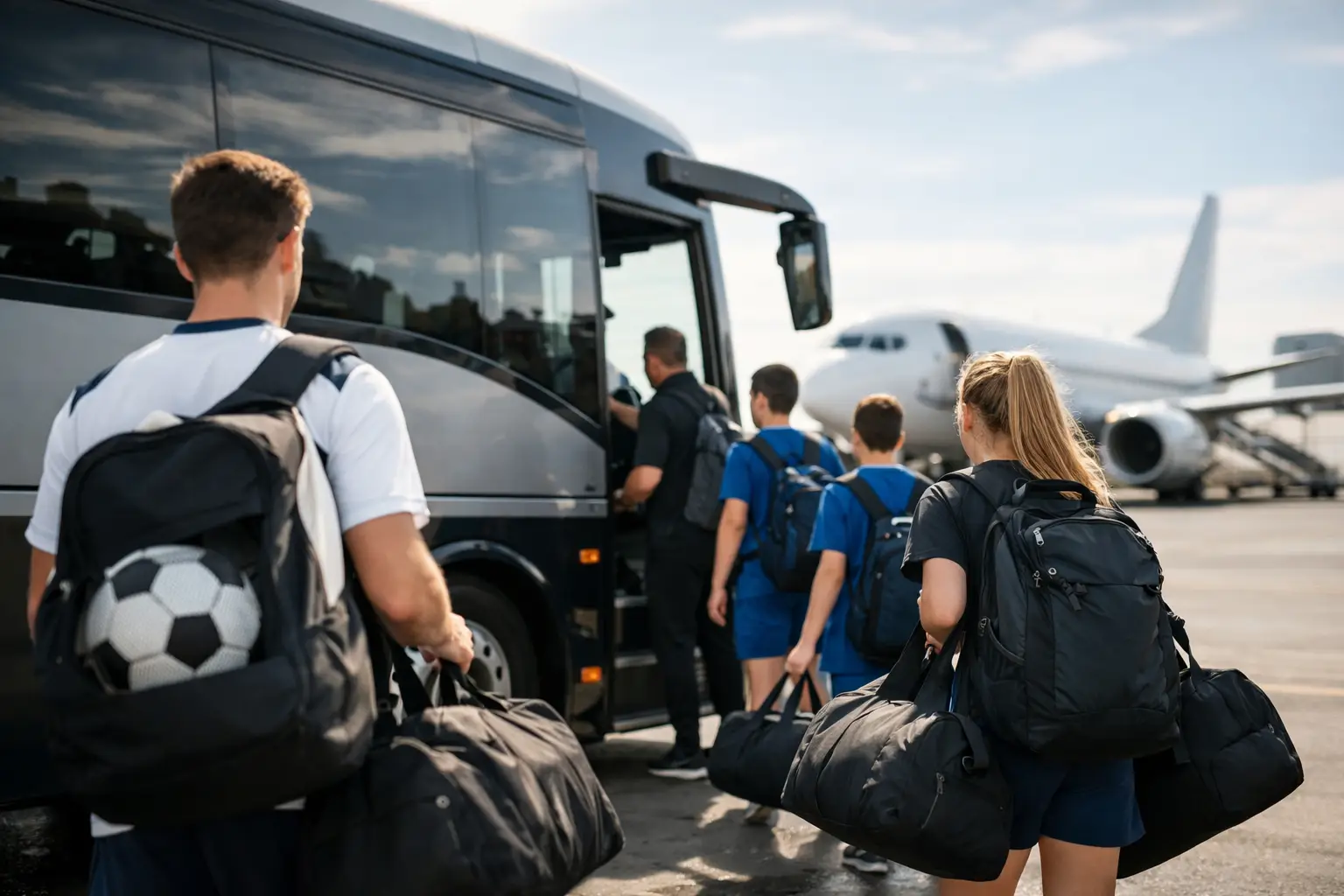
A tournament schedule can look simple until a squad, coaching staff, equipment and supporters all need to arrive at the same venue, on time and ready to perform. Professional sports tournament transfers remove the uncertainty of multiple cars, missed turns, limited parking and players arriving at different times. A planned coach or minibus charter keeps the group together from the first pickup through to the final return journey.
For organisers, transport is not an afterthought. It affects warm-up time, team focus, safety and the overall experience for everyone travelling. The right vehicle, driver and itinerary provide a calm, reliable foundation for a busy competition day.
Why Sports Tournament Transfers Need Proper Planning
Tournament travel is rarely a standard point-to-point trip. Fixtures can start early, venues may be spread across Sydney, and return times can change when games run late or a team progresses to another round. Add bags, uniforms, sports gear, refreshments and tired players, and an ordinary carpool can quickly become difficult to manage.
A dedicated charter gives one organiser a clear transport plan rather than asking several families or staff members to coordinate their own driving. Everyone travels together, the driver follows the agreed pickup and venue details, and the team can use the journey to prepare, debrief or simply rest between matches.
This approach is especially valuable for schools, clubs, representative teams and community groups. It also suits event organisers moving officials, volunteers or visiting teams between accommodation, training grounds and competition venues. Where a day involves several locations, a vehicle and driver on charter can be a more practical choice than arranging separate transfers at each stage.
Punctuality supports performance
Arriving rushed can unsettle even a well-prepared side. A carefully timed departure allows for traffic conditions, venue access, registration and a proper warm-up. It is sensible to build a buffer into the itinerary, particularly for morning fixtures, weekend events and major sporting precincts where traffic and parking can be busy.
Your driver should receive the key details before travel day: pickup addresses, required arrival time, venue gate or drop-off point, contact numbers and any changes to the draw. A clear run sheet means the group is not making last-minute decisions at the kerb.
Keeping the group together matters
When players travel separately, organisers often spend valuable time checking who has arrived, chasing late passengers and adjusting plans around individual vehicles. Group transport creates one arrival point and one departure time. Coaches can account for the team before leaving, while parents and supporters have a simple, dependable travel arrangement.
For younger teams, this also provides greater reassurance. Professional drivers and an accredited operator help make travel safer and more manageable for coordinators responsible for a large group.
Choosing the Right Vehicle for Tournament Travel
The best vehicle depends on passenger numbers, the length of the journey and how much equipment must travel. A compact squad travelling with minimal gear may be well suited to a minibus. Larger teams, supporters and staff generally benefit from a full-size coach with generous seating and luggage capacity.
Comfort deserves attention when the team is travelling across the city or heading to a regional venue. Air conditioning, reclining seats, tinted windows and curtains can make a noticeable difference before an important match and after a demanding day of competition. An integrated PA system can also help a coach or team manager communicate pickup instructions and schedules without repeating themselves down the aisle.
It is worth confirming the passenger count early, then allowing for coaches, managers, trainers and support staff. Do not book solely around the number of players if parents or club members are also expected to travel. A slightly larger vehicle may provide a more comfortable experience, particularly where sports bags need storage.
There is a trade-off, however. A larger coach offers room and comfort, but some smaller venues have restricted driveway access or tight turning areas. Share venue access information during the booking process so the transport plan can match the site as well as the group size.
Equipment and luggage need a plan
Not all sporting equipment travels the same way. Cricket bags, football kits, hockey sticks, netball bibs, medical supplies and recovery gear can take up more room than expected. Let the charter provider know what is coming aboard, including any bulky items, so suitable storage can be arranged.
Equipment should be packed and loaded in an orderly way. Keep emergency and medical items accessible, avoid blocking aisles, and nominate a staff member to check that all bags are collected at each stop. These small details prevent a missing kit bag from becoming a major issue before kick-off.
Build an Itinerary That Allows for Real Conditions
A strong transport itinerary covers more than the first departure and final pickup. It sets out the full day: collection points, passenger numbers, venue arrival, meal breaks, game finish estimates, possible transfers between fields and the final drop-off sequence.
For multi-day tournaments, include accommodation transfers and any training sessions or team functions. If fixtures are released late or results affect the next round, speak with the transport provider about how changes can be handled. Flexibility is valuable, but it works best when likely scenarios are discussed before the coach is on the road.
Venue information should be specific. A street address is useful, but the best drop-off point may be a bus bay, designated coach zone or a particular entry gate. Large complexes can have several fields or courts, so naming the exact competition area helps avoid unnecessary walking and confusion.
Allow realistic time for loading at the first pickup and unloading at the venue. A team carrying gear does not leave a coach as quickly as a group travelling light. The same applies after the final match, when tired players may be showering, packing or waiting for presentations to finish.
What to Confirm Before You Book
The booking conversation should be straightforward, but the quality of the information provided directly affects the quality of the service. Have the travel date, pickup time, pickup location, venue details, expected return time and passenger count ready. Mention all planned stops, equipment requirements and any access limitations at the venue.
It is also helpful to identify one primary contact who can speak with the driver on the day. This person should have a mobile phone switched on, understand the agreed timing and be able to advise quickly if the fixture schedule changes. For larger groups, a second contact is sensible in case the main organiser is occupied with the team.
Ask about vehicle configuration and ensure it suits the group. A modern, well-maintained coach with professional drivers gives passengers a more comfortable and worry-free journey than an improvised collection of cars. For school or junior sport, confirm the provider’s accreditation and safety-led operating standards before finalising arrangements.
Bus Hire Sydney works with organisers to configure charter transport around group size, timing and tournament requirements. With more than 20 years of experience and NSW Government accreditation, the focus is on providing careful, reliable travel for teams and groups when timing matters.
Make the Return Journey Part of the Plan
The journey home is often where transport arrangements prove their value. Players may be tired, supporters may be ready to leave at different times, and an event may finish later than expected. A dedicated return transfer gives the group a known meeting point and a clear departure plan, rather than placing the burden on several drivers after a long day.
For an all-day event, remind passengers at the start of the trip where the coach will collect them and what time they should return. If the vehicle is waiting nearby, confirm the parking location or landmark. If it is collecting from a designated zone, make that clear before the final match begins.
A well-organised sports trip lets players focus on the competition, coaches focus on the team and families focus on supporting from the sideline. Start the transport conversation early, share the full itinerary, and choose a charter arrangement that gives your group the safe, comfortable and dependable journey the tournament deserves.