

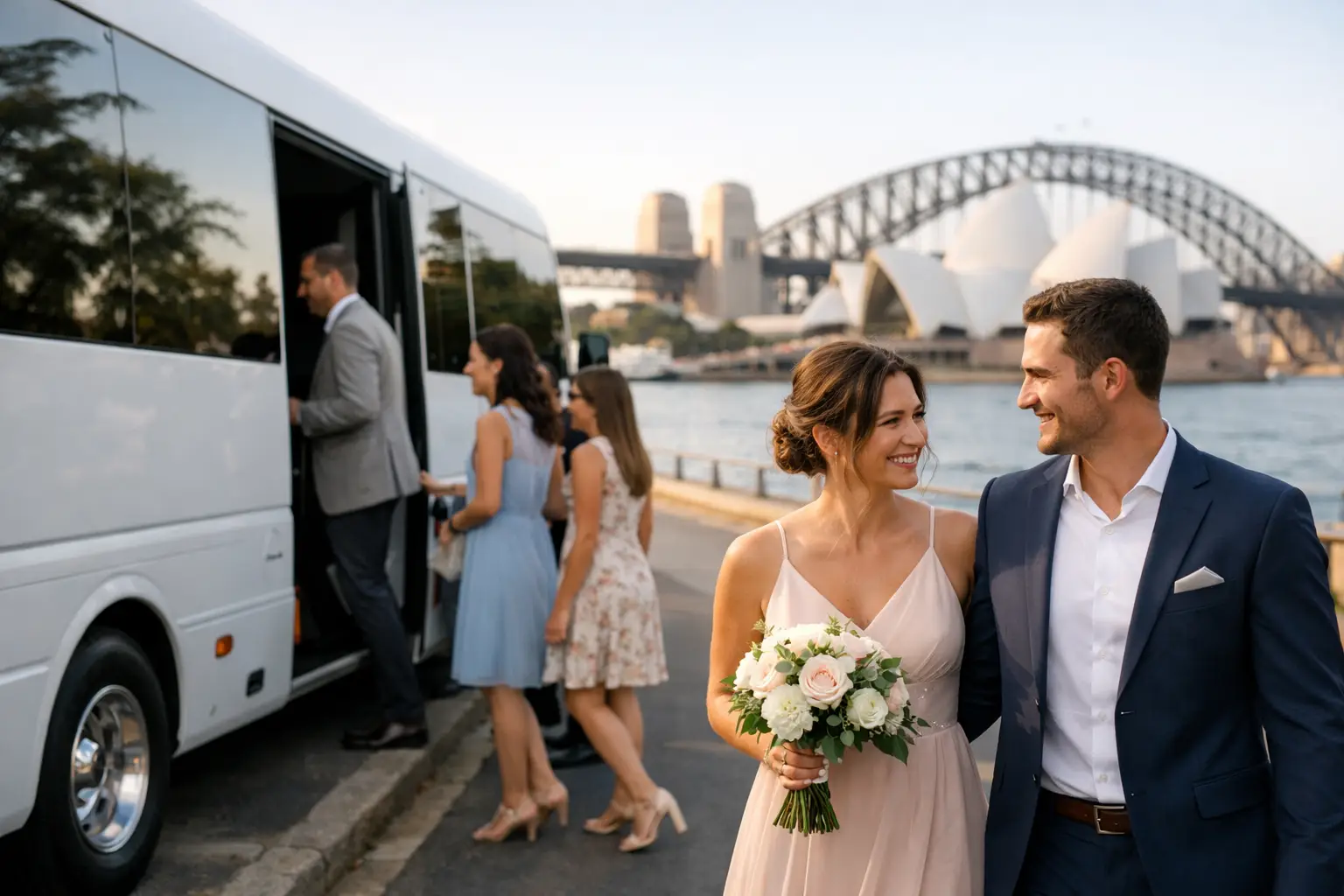
A wedding can run beautifully until 60 guests try to find the same regional venue, park in a limited space and make it back to the city after dark. A wedding guest shuttle Sydney service gives everyone a clear plan for getting there and home again, while allowing the couple to focus on the occasion rather than answering transport calls.
For weddings at hinterland estates, waterfront venues, hotels, wineries or private properties, organised group transport is more than a convenience. It is a practical way to keep guests together, reduce late arrivals and provide a comfortable option for people who may not know the area or prefer not to drive.
Why a Wedding Guest Shuttle Sydney Service Matters
Wedding transport works best when it is planned around the guest experience, not simply the distance between venues. A coach or minibus can collect guests from a central meeting point, selected accommodation or a ceremony location, then deliver them close to the venue entrance at an agreed time. That means fewer cars arriving in stages and less pressure on hosts to coordinate directions, parking and return travel.
It is particularly valuable where the reception is outside central Sydney, parking is restricted, or guests are travelling from interstate. Older relatives, families with young children and guests unfamiliar with local roads can travel with confidence rather than navigating an unfamiliar route after a long celebration.
A dedicated shuttle also supports a more reliable event schedule. When the majority of guests arrive together, the ceremony can begin as intended and the reception can move smoothly from one part of the evening to the next. For couples, that reliability is often worth more than trying to coordinate dozens of individual travel plans.
Start With the Guest Journey
The best charter plan begins by mapping the full journey. Consider where guests will be before the ceremony, when they need to arrive, whether transport is needed between ceremony and reception, and how they will return at the end of the night.
A central pickup point is usually the simplest option for a large group. Hotel precincts, a convenient train station meeting area or a well-known city location can make instructions easier to follow. If guests are staying across several hotels, multiple pickups may be appropriate, although each additional stop affects travel time and boarding time.
For a wedding with separate ceremony and reception venues, transport between locations should be treated as its own transfer. Allow time for photographs, farewells and guests returning to the vehicle. A careful schedule builds in a buffer rather than relying on every person boarding at the exact minute planned.
Return services require the same attention. Some weddings suit one departure at the end of the reception. Others are better served by two or three scheduled return runs, particularly where guests have different needs or the venue has a firm closing time. Confirming these times before invitations are sent helps guests make sensible arrangements.
Choose pickup details guests can follow
Clear instructions prevent avoidable delays. Guests should know the pickup address, meeting side of the street, departure time and a contact number for the day. It is helpful to distinguish between the time the vehicle arrives and the time it departs. Asking passengers to arrive 10 to 15 minutes early gives the driver time to board the group safely and leave on schedule.
Avoid vague directions such as “near the station” or “outside the hotel”. A precise location, especially in busy city areas, reduces confusion and keeps the group moving. If accessibility needs, prams or mobility aids are involved, include this information during planning so the right arrangements can be made.
Match the Vehicle to the Group, Not Just the Headcount
The right vehicle depends on passenger numbers, luggage, travel distance and the standard of comfort guests require. A minibus can be an excellent choice for an intimate wedding party or a small accommodation transfer. A larger coach is often more practical for a full guest list travelling from one central location.
Do not base the decision on a preliminary RSVP count alone. Wedding numbers can change in the final weeks, and it is better to provide enough seats for confirmed passengers than ask guests to find their own way at the last minute. If the group is large, using more than one vehicle can be a sensible option, particularly when guests are travelling from different areas or require separate return times.
Comfort matters on longer journeys. Air conditioning, reclining seats, tinted windows, curtains and a professional PA system can make a noticeable difference on a warm afternoon or an evening transfer. These features are especially useful for trips to regional venues, where guests may be on board for an hour or more.
Vehicle access also deserves consideration. Some properties have narrow driveways, steep entries or limited turning space. Providing the transport provider with accurate venue details early allows suitable vehicles and safe pickup points to be considered. The closest possible drop-off is not always the safest or most efficient option.
Build a Schedule That Can Handle a Real Wedding Day
Wedding timelines are rarely exact. Hair and makeup can run over, traffic can build unexpectedly, and a final group photo can take longer than planned. The transport schedule should account for those realities while still giving guests confidence about where they need to be.
For the outward trip, aim to have guests arrive well before the ceremony start time. This allows for walking from the drop-off area, finding seats and greeting family without delaying the formalities. The buffer needed depends on the venue layout, but 20 to 30 minutes is often more comfortable than arriving at the ceremony time itself.
For return travel, set departure times that are easy to communicate and stick to them where possible. A driver can provide a clear reminder before departure, but the wedding party should nominate one reliable contact who can help gather guests if needed. This is far more effective than expecting the newlyweds to manage transport at the end of the night.
Traffic conditions should also shape the plan. Sydney weekend events, roadworks and popular precincts can affect travel times. An experienced local charter provider can help assess practical departure windows and suitable routes, rather than working from an optimistic map estimate.
Give Guests One Simple Transport Message
Once the plan is confirmed, include it wherever guests are likely to look: the wedding website, invitation insert or event message. Keep the wording concise and consistent. Tell guests whether they need to reserve a seat, whether the shuttle is optional, and whether it will return to the same pickup location.
If the service is intended for all guests, make that clear. If places are limited, request responses by a firm date so vehicle capacity can be finalised. Guests should also be asked to advise of mobility requirements, child seats where relevant, or oversized items that could affect seating and storage.
A short reminder in the days before the wedding is worthwhile. Include the pickup location, boarding time, expected travel duration and return departure times. Good communication is one of the simplest ways to protect the schedule and make guests feel looked after.
What to Confirm With Your Charter Provider
A dependable wedding transfer is built on accurate information. When requesting a tailored charter plan, provide the wedding date, passenger estimate, pickup points, venue addresses, ceremony and reception times, and expected return schedule. Mention any access restrictions, luggage, accessibility requirements or multiple passenger groups from the outset.
It is also wise to confirm how the day will be managed if timings change. Weddings need flexibility, but flexibility works best within an agreed operating plan. A professional provider can explain practical options for vehicle allocation, waiting time and staged transfers without leaving key decisions until the day itself.
Bus Hire Sydney plans wedding charters around these details, with experienced drivers, modern vehicles and NSW Government accreditation supporting safe, reliable group travel. The aim is straightforward: guests should feel comfortable from boarding to drop-off, and organisers should know the transport is being handled carefully.
A well-planned shuttle does more than move people between places. It gives guests a relaxed start, a safe way home and one less reason for the wedding day to run behind.