

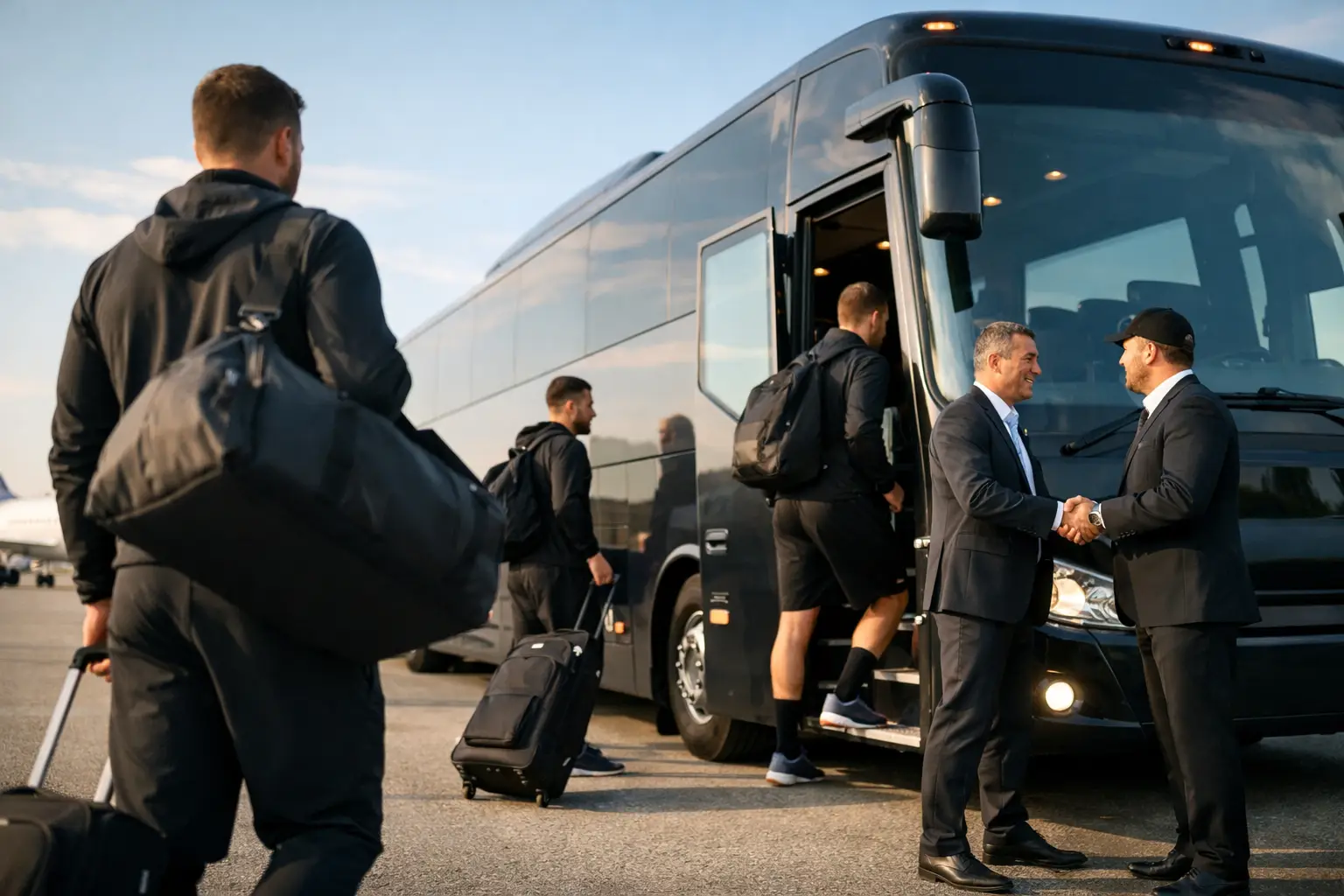
A 9.00 am kick-off does not leave room for missed turns, split arrivals or parents trying to find parking near the ground. Professional sports team bus transport puts the whole squad, coaching staff and required equipment on one organised schedule, so the day begins calmly and the team arrives ready to play.
For organisers, transport is more than getting from A to B. It affects warm-up time, player wellbeing, attendance, equipment handling and the experience of families and supporters. A carefully planned coach charter removes the moving parts that can make away games, carnivals and finals unnecessarily stressful.
Why sports team bus transport makes match days easier
When players travel separately, timing becomes difficult to control. One late arrival can delay warm-ups, team briefings or registration, while multiple cars create parking and drop-off issues at busy sporting venues. Travelling together gives the organiser one departure time, one arrival plan and one clear point of contact.
It also helps the team prepare properly. Players can rest, hydrate, discuss the game or simply switch off during the journey rather than focusing on traffic. For longer trips, a luxury coach with air conditioning, reclining seats, tinted windows and curtains offers a noticeably more comfortable environment than a convoy of private vehicles.
There is a practical safety benefit as well. An experienced, professional driver manages the route, road conditions and venue access while the coach supervisor, manager or parent coordinator can focus on passengers. This is particularly valuable for early starts, evening returns and unfamiliar regional grounds.
Choose the right vehicle for your squad
The best vehicle depends on passenger numbers, travel distance and what needs to come along. A junior team travelling with a small number of coaches may suit a minibus, while a full senior squad, officials and support staff may require a larger coach. If supporters or family members are travelling too, it may be more practical to arrange a second vehicle rather than asking everyone to make separate arrangements.
Equipment matters just as much as headcount. Football bags, cricket kits, water containers, first-aid supplies, training gear and marquees can take up considerable space. Share these details when planning the trip so the transport provider can recommend a vehicle configuration with suitable luggage capacity. Do not assume every seat can be filled if a large amount of gear is required.
For representative teams and tournament groups, comfort becomes increasingly important as travel time grows. A modern luxury coach creates a more settled journey, especially when players need to perform shortly after arrival. An integrated PA system can also assist with trip updates, roll calls and instructions without shouting down the aisle.
Consider who is travelling
A reliable booking begins with an accurate passenger list. Include players, coaches, managers, trainers, officials and any approved supporters. If minors are travelling, nominate the adults responsible for supervision and ensure everyone understands pickup, return and conduct arrangements.
It is worth allowing a small buffer for late team selections or last-minute staff changes. However, vehicle capacity is fixed, so numbers should be confirmed before departure. Clear communication protects both passenger comfort and safety.
Plan the itinerary around the sporting schedule
A fixture time is not the same as a departure time. Work backwards from the scheduled start and include the time needed for parking, venue access, registration, team preparation and warm-up. Major sporting precincts can be busy on weekends, and large carnivals may have designated bus zones or restricted access points.
Provide the full itinerary at the time of enquiry: pickup address, preferred pickup time, destination, match or event start time, expected finish, return location and any planned stops. If the team has multiple games across a day, include the gaps between them. A driver can then be scheduled to remain available or return at an agreed time, depending on the event requirements.
For interstate or regional travel, rest breaks should be planned realistically. The shortest route is not always the best option if it leaves no time for meals, toilet stops or unexpected delays. A careful itinerary gives players enough time to arrive composed rather than rushed.
Build in sensible time allowances
Traffic, wet weather, roadworks and event congestion can all affect travel. Building a reasonable allowance into the schedule is not wasted time. It is what prevents a small delay from becoming a stressful arrival.
This matters most for finals, trials, airport connections and tightly scheduled competitions. A professional charter operator can help consider practical travel conditions when preparing the journey, but organisers should also advise of any non-negotiable arrival time.
Keep the team comfortable and accountable on board
Good transport planning supports good team management. Before departure, confirm the meeting point, arrival time, seating expectations and emergency contact arrangements. For younger groups, a roll call before leaving each location is essential, including after meal stops or between tournament venues.
The onboard environment should remain respectful and safe. Food and drink policies can vary, so check arrangements before the trip rather than making assumptions. If players need to bring recovery snacks, sports drinks or medication, let the transport provider know where appropriate and make sure these items are managed by the responsible adults.
A coach or team manager should carry key details on the day, including venue contacts, the driver’s service information, the itinerary and a current passenger list. This simple preparation is particularly helpful when travelling to large facilities with several entrances or allocated drop-off zones.
What to confirm before booking a team coach
A dependable charter service should make the booking process clear. Ask about the vehicle capacity, luggage allowance, pickup arrangements, planned route, driver experience and accreditation. For a group carrying children or travelling on behalf of a club, it is reasonable to seek confidence that the operator is properly accredited and safety-led.
You should also explain any details that could change the service on the day. These may include wheelchair access needs, multiple pickup points, oversized equipment, a delayed finish due to knock-out rounds, or a team meal stop after the game. Early information makes it easier to create a practical plan and avoids avoidable changes close to departure.
The right service is not always the largest coach available. It is the vehicle that fits your group comfortably, accommodates equipment and suits the itinerary. A smaller vehicle can be an efficient choice for a compact squad, while a full-size coach may be the better option for longer distances and larger travelling parties.
Reliable transport for every level of sport
Sports team travel can range from a one-off local fixture to a full season of away games. Clubs may need regular transfers for training, competition days and presentation events. Schools, community associations and representative squads may require transport for gala days, regional championships or multi-day tours.
The common requirement is reliability. Teams need a driver who arrives as arranged, a vehicle that is clean and comfortable, and a transport plan built around the event rather than a generic timetable. With more than 20 years of operating experience and NSW Government accreditation, Bus Hire Sydney can tailor coach and minibus charters to the specific needs of sporting groups.
The best match-day transport is the kind nobody has to worry about once the team is onboard. Confirm the details early, choose a vehicle that genuinely suits the group, and give your players the calm, comfortable start they need before the whistle blows.