

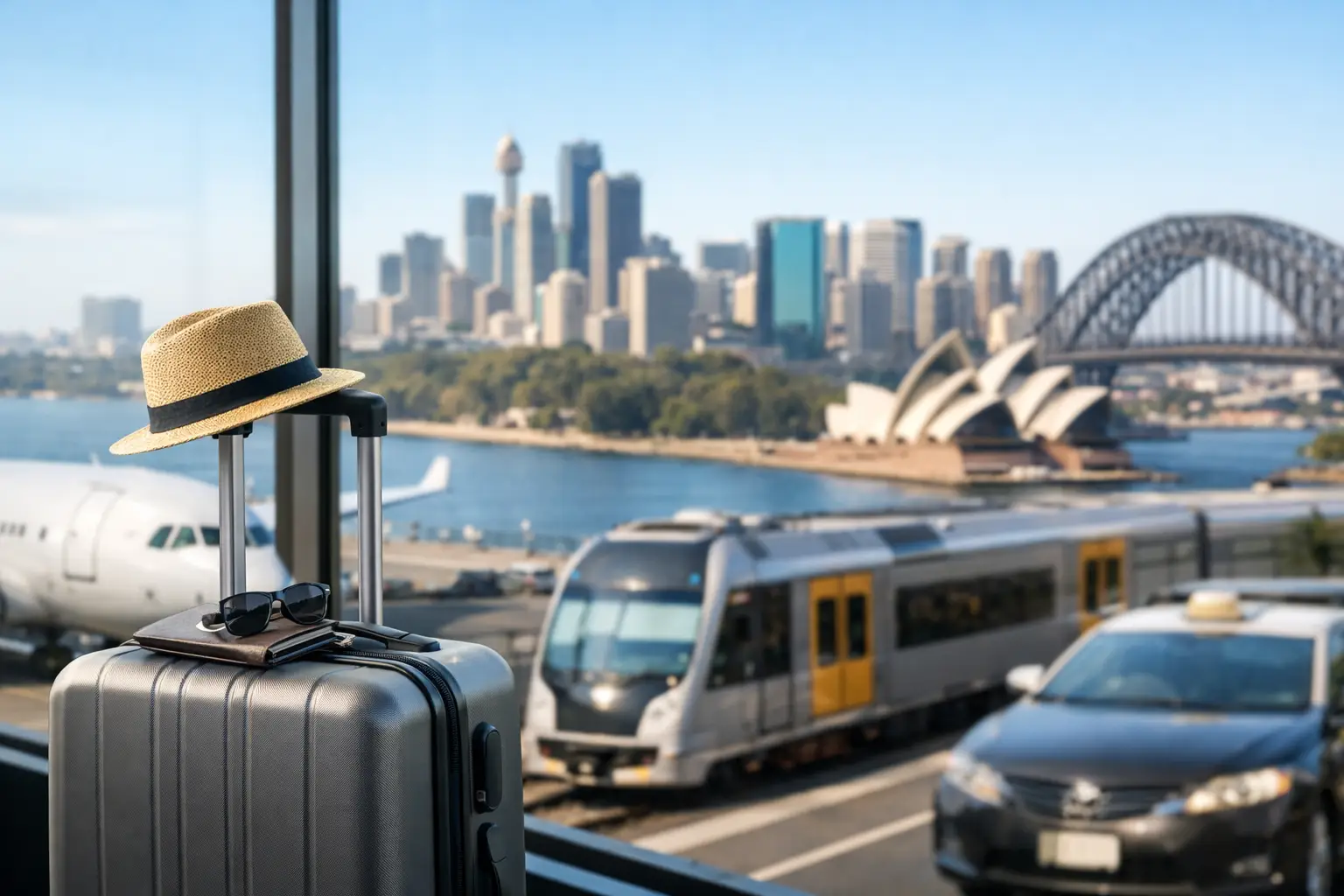
A delayed arrival, tired passengers and too many bags can turn a simple transfer into the most frustrating part of the trip. If you are working out how to get from Sydney Airport to city, the right option depends less on distance and more on timing, group size, luggage and how much coordination you need.
For a solo traveller with light bags, the quickest route may be very different from what works for a family, a corporate team or a school group. Some passengers need the fastest trip. Others need door-to-door convenience, space for luggage or the certainty of a booked vehicle waiting on arrival. That is where it pays to compare the real trade-offs rather than defaulting to the first option you see.
How to get from Sydney Airport to city: your main options
Sydney Airport is close to the CBD by international standards, which gives travellers several practical ways to reach the city. The most common are train, taxi, rideshare, hotel shuttle in limited cases, and pre-booked private transfer or group charter.
The train is usually the most direct public transport option. It suits passengers who are comfortable managing their own bags, following station signage and making their way from a city station to their final destination. If your hotel or office is near Central, Town Hall, Wynyard or Circular Quay, rail can be efficient. The trade-off is obvious if you are arriving after a long flight with children, mobility needs or bulky luggage. Station access is good, but it is not the same as being dropped at the door.
Taxis remain a straightforward choice for travellers who want a simple point-to-point transfer. They are easy to understand, especially for visitors unfamiliar with the city, and they remove the need to navigate platforms or timetables. The downside is that availability, traffic and vehicle size can all affect how smooth the trip feels. A standard cab may not suit larger groups or passengers with significant luggage.
Rideshare services offer similar convenience, but they come with a little more uncertainty. Pick-up zones can involve extra walking, app coordination and wait times that vary by demand. For one or two people, this may be manageable. For a group trying to stay together after a flight, it can quickly become less practical.
Pre-booked private transfers are often the most reliable option for travellers who want certainty. You know who is collecting the group, what vehicle is arriving and how the transfer will run. For business travellers, families, wedding parties, sports teams or school groups, that level of planning can remove a great deal of stress.
Is the airport train the best way to reach the city?
The airport train is often promoted as the default answer, and in many cases it is a good one. The stations at the domestic and international terminals connect directly into the suburban rail network, and trains run regularly into the CBD.
For an individual traveller arriving at a predictable time with one suitcase, the train can be the fastest path into town, particularly during busy road traffic periods. It also avoids the uncertainty of motorway congestion. If your final stop is within walking distance of a CBD station, it makes even more sense.
But the train is not automatically the best choice for everyone. If your destination is not close to a station, you may still need a taxi or another transfer at the city end. That means more transitions, more waiting and more handling of luggage. For older passengers, young children or corporate guests arriving for a tight schedule, those extra steps matter.
It is also worth thinking about arrival time. Late-night arrivals, very early morning flights or groups landing at slightly different times can make public transport less appealing. What looks efficient on paper can become awkward in practice when people are tired, unfamiliar with the area or trying to regroup after customs.
Taxi, rideshare or private transfer?
This is where needs become more specific. A taxi is often the quickest decision because it is familiar and readily available. You join the rank, load your bags and go. That simplicity has real value, especially for interstate travellers or overseas guests who just want to get moving.
Rideshare can work well for smaller parties, but it asks a little more from the passenger. You need app access, a charged mobile, clear communication and a willingness to meet the driver at the designated zone. None of that is difficult by itself, but it is less suitable when your priority is keeping a group together and on schedule.
A private transfer becomes the stronger option when reliability is more important than improvisation. That includes corporate arrivals, event guests, cruise passengers, families with extra luggage and any group where one missed connection creates a wider problem. With a pre-arranged vehicle, the transfer is planned around your booking rather than left to airport demand on the day.
For groups, it is rarely efficient to split passengers across multiple cars unless there is no alternative. Separate vehicles create separate arrival times, duplicate coordination and more room for delay. A single minibus or coach transfer keeps everyone together, reduces confusion and makes the arrival feel properly managed.
How to get from Sydney Airport to city with a group
If you are arranging transport for more than a few passengers, the question shifts from convenience to logistics. How to get from Sydney Airport to city as a group is not just about moving people from A to B. It is about keeping the itinerary intact, protecting timing and avoiding the usual airport chaos of missed calls, scattered passengers and too many bags in too few vehicles.
A pre-booked group transfer is often the safest operational choice. It gives organisers a confirmed collection plan, a vehicle sized for the passenger count and luggage, and a professional driver who understands airport procedures. That matters for office managers welcoming interstate staff, school coordinators moving students, production teams carrying equipment or wedding planners handling guest arrivals.
The other advantage is consistency. Everyone departs together, arrives together and starts the next stage of the day on time. That may sound simple, but when flights, venue access times and event schedules are involved, simple is exactly what you want.
For larger groups, a chartered vehicle also improves comfort. Instead of squeezing into multiple cars or trying to monitor who has gone where, passengers have room to settle in after the flight. Air conditioning, comfortable seating and organised luggage storage make a noticeable difference, especially when travellers are heading straight to a meeting, venue or accommodation.
Choosing the right transfer for your situation
The best transfer depends on what kind of trip you are running. A solo business traveller with hand luggage may choose speed and head for the train. A couple with suitcases may prefer a taxi for direct access to their hotel. A family with prams and tired children may find a pre-booked vehicle far easier than public transport.
For corporate groups, a professional transfer usually makes the strongest impression. It supports punctuality, keeps staff or clients moving together and reduces the risk of delays caused by ad hoc travel decisions. For schools and community groups, safety and clear supervision are usually the deciding factors, which makes a chartered transfer the more dependable choice.
If you are booking for a special event, think beyond the airport itself. Ask whether the transfer needs to fit into a larger schedule, whether passengers will arrive on the same flight, and whether luggage or equipment needs extra room. The most suitable option is the one that works at both ends of the journey, not only at the terminal.
That is why many organisers choose an accredited operator with experience in airport and group movements. A provider such as Bus Hire Sydney can tailor the vehicle to the booking rather than forcing the booking to fit a standard car arrangement.
A smarter way to plan the airport run
The distance from Sydney Airport to the city is manageable. The real challenge is matching the transfer to the people travelling. Public transport can be quick, taxis can be convenient, and rideshare can suit simple trips. But when timing, safety, comfort and group coordination matter, a pre-booked transfer is often the more reliable decision.
The easiest airport trip is usually the one that has already been planned properly before the flight lands. If you are arranging travel for others, that peace of mind is worth more than shaving a few minutes off the route.