

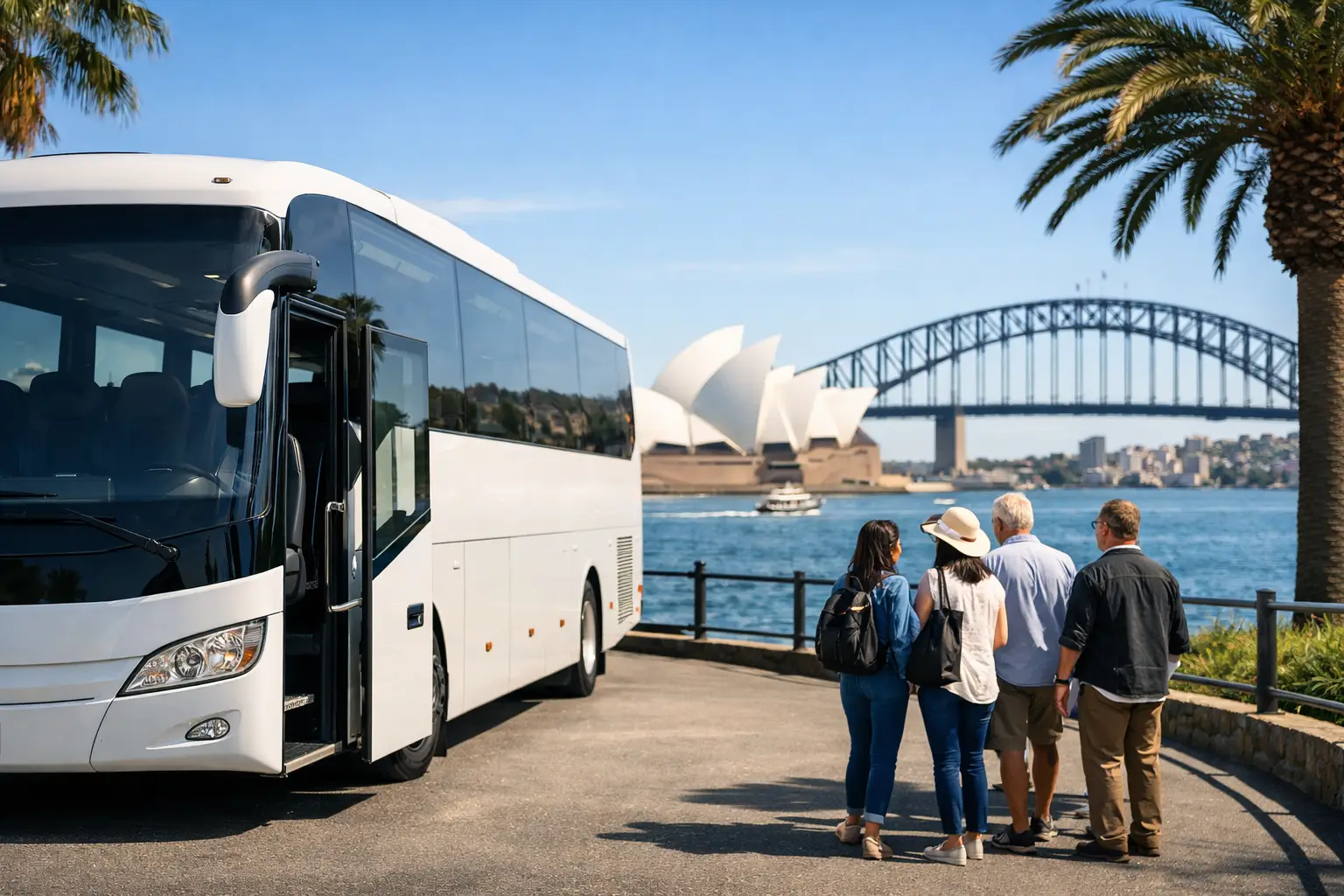
When one person is responsible for moving 20, 40 or more people, transport can quickly become the detail that affects everything else. Reliable bus hire keeps a group together, protects the schedule and gives passengers a comfortable place to travel between venues, terminals, accommodation and events.
For an office manager arranging an airport transfer, a wedding coordinator managing multiple locations or a sports organiser working to a fixed kick-off time, the right charter is about more than getting from A to B. It is about having a clear plan, an appropriately sized vehicle and an experienced driver who understands the importance of punctual, careful service.
What good bus hire should solve
A well-planned charter removes the common friction of group travel. Rather than asking guests to navigate unfamiliar roads, find parking or arrive at different times, everyone travels to the same plan. This is particularly valuable in Sydney, where traffic conditions, major events and limited parking can make individual car travel unpredictable.
The practical benefits are straightforward. A single point of coordination makes passenger communication easier, while one agreed pickup location and departure time reduces delays. It also gives organisers greater control over return travel, especially after a long conference day, a wedding reception, a sporting fixture or a winery itinerary.
Comfort matters as well. Air conditioning, reclining seats, tinted windows, curtains and an integrated PA system can make a real difference on longer journeys. These details are not simply extras when passengers need to arrive settled, prepared and on time.
Start with the trip, not the vehicle
It is tempting to begin by asking for the biggest vehicle available. A better approach is to define the journey first. Passenger numbers are essential, but they are only one part of the booking. The trip purpose, pickup conditions, luggage requirements, route and timing all influence the most suitable option.
For instance, a compact minibus may suit a small executive team travelling to the airport with light luggage. A larger coach may be a better fit for a sporting group carrying equipment, or for wedding guests travelling between a ceremony and reception venue. A corporate transfer might require a quiet, comfortable vehicle for guests to prepare during the journey, while a production transport plan may need several pickup points and a flexible schedule.
Provide an accurate passenger estimate, including organisers, children, support staff and drivers where relevant. It is also wise to allow for luggage, prams, sporting equipment, instruments or production gear. A vehicle that has enough seats but insufficient room for bags can create avoidable complications at departure.
Confirm the full itinerary
A charter quote is most useful when it is based on clear operational information. Share the pickup address, requested arrival and departure times, all stops, final destination and expected return journey. If a group is attending a venue with a strict access window, state this clearly.
Also flag conditions that can affect access. Narrow streets, steep driveways, low-clearance entries, loading zones and busy city locations may influence where the vehicle can safely stop. For airport transfers, include flight details and allow appropriate time for passengers to collect luggage and meet at the designated point.
An itinerary does not need to be complicated. It simply needs to reflect what will actually happen on the day. The more complete the information, the easier it is to match the right vehicle, driver timing and route plan to the booking.
Choose a vehicle that suits your passengers
Fleet flexibility is valuable because no two groups travel in exactly the same way. A minibus is often an efficient choice for smaller groups, local transfers and trips where access is restricted. A full-size coach is more appropriate when passenger numbers are higher or the journey involves longer distances and a greater need for onboard comfort.
Luxury coach travel can be especially suitable for corporate guests, weddings, organised tours and interstate or regional journeys. Passengers benefit from a more relaxed environment, while organisers gain the confidence of a professional, coordinated arrival.
There is a balance to consider. Booking too small can leave passengers and bags without enough space. Booking substantially larger than required may not be necessary for a short, simple transfer. The best fit depends on the group, the journey and the level of comfort expected, rather than passenger numbers alone.
Put timing at the centre of the plan
For time-sensitive travel, build the schedule around the required arrival time, not the intended departure time. Work backwards from a flight check-in, conference registration, ceremony, fixture or venue entry time. Then allow a realistic margin for boarding, traffic and any scheduled stops.
Ask passengers to arrive before the coach is due to leave, particularly where there are large groups or luggage to load. One clear message with the pickup address, boarding time, contact person and return arrangements can prevent a stream of last-minute calls.
For multi-stop journeys, nominate a group representative at each pickup point. This person can help confirm numbers, communicate any changes and ensure the group boards efficiently. It is a simple measure that is particularly useful for schools, community groups, production crews and large private bookings.
Plan return transport with equal care
The return leg is often where otherwise good plans become loose. Guests may leave a venue at different times, event finishing times may shift, or a group may be tired after a full day. Agree on the return pickup point before the outward journey begins and make sure passengers know it.
Where possible, choose a pickup location that is easy to identify and safe for coach access. A clearly communicated meeting point is better than asking people to gather somewhere vague near a busy venue. If the itinerary needs flexibility, discuss this while arranging the charter so the service can be planned appropriately.
Safety and professionalism are non-negotiable
Group transport involves a duty of care. The provider should have the right accreditations, a well-maintained fleet and professional drivers who are experienced in passenger transport. These fundamentals are particularly important for school travel, government-related work, senior groups and any journey involving tight schedules or long distances.
Accreditation gives organisers confidence that a transport operator is working within the required standards. Experienced drivers add another layer of reassurance. They bring practical knowledge of safe vehicle operation, passenger comfort, route management and the calm handling of changing conditions.
Before confirming a charter, make sure the provider understands the nature of the group and any relevant requirements. This may include child supervision arrangements, mobility considerations, equipment storage, venue instructions or a production timetable. Clear information allows the service to be tailored carefully rather than treated as a generic transfer.
When a custom charter makes the difference
Some journeys are simple point-to-point transfers. Others need more detailed coordination. A winery tour may involve a sequence of timed stops. A television or film production can require crew movements across several locations. A corporate event may need separate collection times for guests arriving from different offices or hotels.
In these situations, custom planning is not an added complication. It is what keeps the day moving. A provider that asks the right questions early can help identify practical details before they become problems, from vehicle capacity through to access arrangements and passenger communication.
Bus Hire Sydney brings more than 20 years of operating experience to organised group transport, with accredited services, professional drivers and a modern range of minibuses and luxury coaches. The focus is on matching each booking to the people, purpose and timetable involved.
A successful group journey usually comes down to a few careful decisions made before anyone boards. Confirm your numbers, share the complete itinerary, choose a vehicle for the real travel conditions and give passengers one clear plan. With those details in place, the transport becomes the dependable part of the day that everyone can simply rely on.