

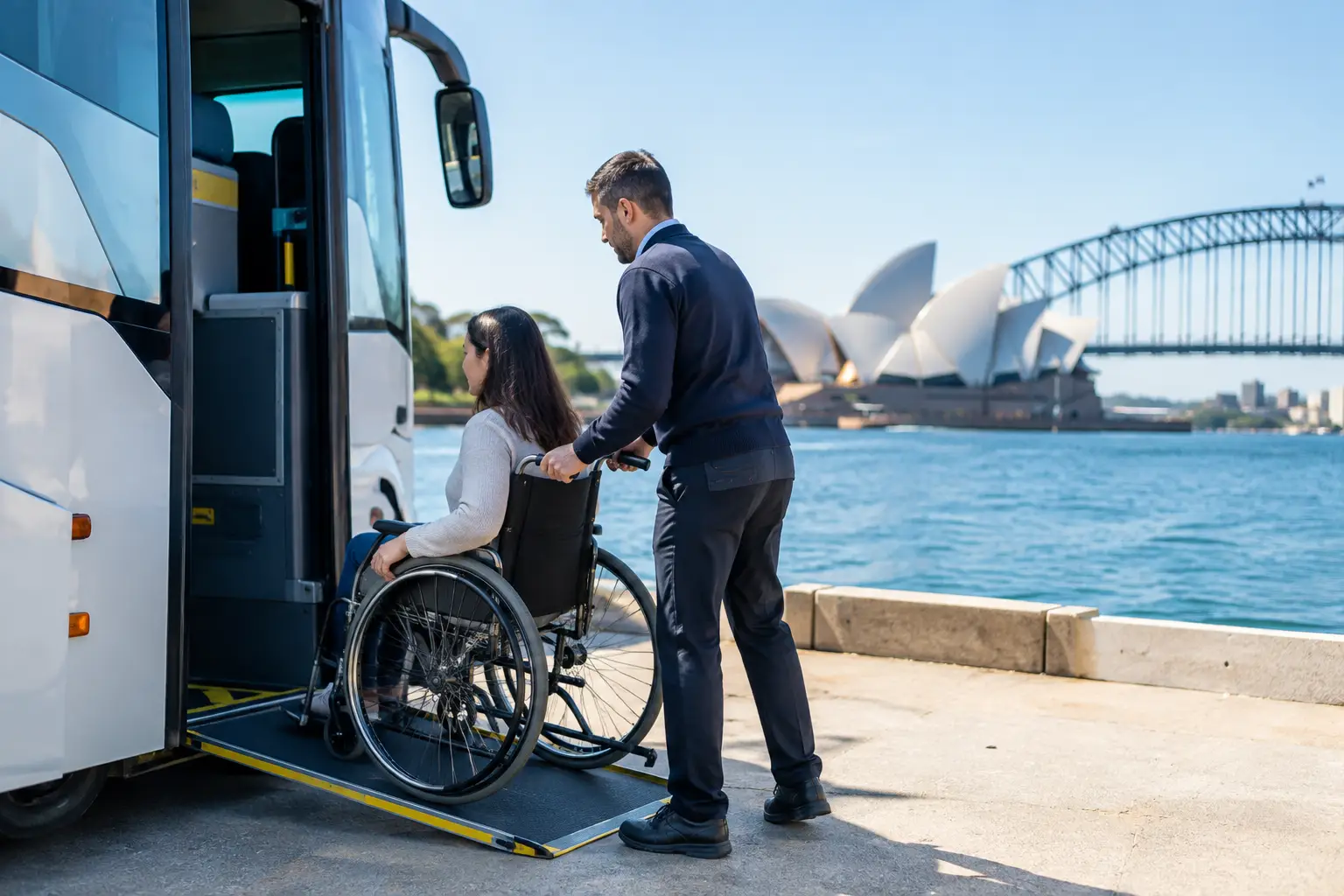
A coach can look premium, arrive on time and have the right number of seats, yet still be unsuitable for a passenger with mobility requirements. A steep entrance, narrow aisle, inaccessible venue set-down point or poorly planned comfort stop can turn a straightforward group transfer into a stressful experience. Finding the best coaches for accessible travel starts with the details of the passengers, the journey and the support required at every stage.
For group organisers, accessibility should be built into transport planning from the first enquiry. This is particularly relevant for corporate outings, community groups, sporting transfers, weddings, airport travel and government or private events where every passenger needs to travel safely and comfortably together.
What makes a coach suitable for accessible travel?
There is no single coach that is automatically right for every accessible trip. The best option depends on whether passengers use a wheelchair, can manage a few steps with assistance, need priority seating, require extra boarding time or travel with carers and mobility equipment.
A suitable vehicle begins with safe, practical access. This may include a wheelchair lift or ramp, appropriate wheelchair restraint points, handrails, non-slip entry steps and room for a carer to sit nearby. Passengers with reduced mobility may not need a wheelchair-accessible coach, but can still benefit greatly from low, well-lit steps, sturdy handrails and a driver who allows boarding at a calm, unhurried pace.
Comfort matters once everyone is on board. Air conditioning, reclining seats, curtains, tinted windows and a clean, well-maintained interior can make longer journeys more manageable. For a group travelling between several locations, an integrated PA system can also help the organiser communicate timings and instructions clearly without passengers needing to move through the coach.
The key point is that accessibility is more than the doorway. It includes the path from the pick-up point to the vehicle, the space around the coach at each stop, passenger seating, luggage handling and the timing of the day.
How to choose the best coaches for accessible travel
Start by collecting the information that affects vehicle selection. A reliable charter provider can only recommend the right coach when it understands what passengers genuinely need. Broad descriptions such as “some mobility issues” are a useful starting point, but clearer details help avoid assumptions.
Ask passengers or their representatives whether anyone will remain in a wheelchair during travel, whether a mobility scooter or folding walker will be brought along, and whether assistance is needed for steps. Confirm how many carers or support workers are travelling too. This affects seating arrangements as well as the amount of space required for equipment.
It is also worth considering the trip duration. A short hotel-to-venue transfer may suit a different vehicle and boarding arrangement from a full-day tour with multiple stops. On longer itineraries, plan accessible toilet and meal breaks in advance. A comfortable coach cannot compensate for venues or rest areas that are difficult to enter.
Check wheelchair access and securement properly
If a passenger travels in a wheelchair, do not rely on a general statement that a coach is “wheelchair friendly”. Confirm that the vehicle is configured to carry a wheelchair safely for the relevant journey. Ask about the boarding lift or ramp, the available wheelchair position, tie-down restraints and whether the passenger’s wheelchair dimensions can be accommodated.
Power wheelchairs and mobility scooters can be heavier and larger than standard manual chairs, so their size and weight should be provided during the booking process. Folding mobility aids may be stored differently, but still need to be accounted for so aisles and exits remain clear.
Safety-led planning is essential here. Wheelchair securement is not an optional add-on or a last-minute seating adjustment. It requires a suitable vehicle, correct equipment and trained handling.
Match capacity with comfort, not just seat numbers
A coach seating configuration is only one part of capacity planning. A group of 30 passengers may require a larger vehicle than the seat count suggests if wheelchairs, walkers, medical equipment, luggage or support staff are involved.
Allowing extra room can be a sensible decision, especially on airport transfers or full-day charters. Passengers should not be asked to squeeze bags around their feet or navigate blocked aisles. Clear access makes the journey safer for everyone, including passengers who do not have a mobility requirement.
For smaller groups, a minibus may be practical when the itinerary involves tighter streets or limited venue access. For larger groups travelling together, a full-size coach can provide greater comfort and luggage capacity. The right choice depends on the route as much as the passenger total.
Plan pick-ups, set-downs and stops with care
The most accessible coach in the fleet is of limited use if it cannot pull up safely at the collection point. Before confirming the itinerary, consider kerb space, gradients, traffic conditions, footpath access, weather cover and the walking distance to entrances.
For a Sydney event or transfer, city-centre loading restrictions and busy venue forecourts may affect where passengers can board. A professional operator can help plan a practical set-down location, but the organiser should also check directly with hotels, venues, clubs or attractions about accessible entry points and coach access.
Build realistic timing into the schedule. Boarding a mixed-mobility group takes longer than loading passengers who can all climb steps quickly. There is no benefit in setting an ambitious departure time if it creates pressure for passengers or carers. A well-planned charter allows time for safe boarding, securing mobility equipment and assisting people into their seats before departure.
Where several stops are planned, keep the day predictable. Give passengers clear advice on departure times, meeting locations and how long they will have at each destination. If the group has a tour leader, they can use the coach PA system to repeat key information before passengers disembark.
Questions to ask before you book
A careful provider should welcome detailed questions. Clear communication early on is the best way to protect passenger safety and avoid changes on the day. When requesting a quote, provide the travel date, passenger numbers, pick-up and return times, full itinerary, luggage requirements and any known access needs.
You should also ask whether the proposed vehicle has the specific features required for your group, how wheelchair users will be accommodated, and what information the driver will receive before the trip. Confirm whether there are any route, venue or vehicle-access limitations that could affect the plan.
It is reasonable to discuss assistance expectations as well. Drivers are experienced transport professionals, but passengers who need personal care or physical support may need to travel with a carer or support worker. Being clear about responsibilities creates a safer, more comfortable experience for all involved.
Why an experienced operator makes a difference
Accessible group transport involves more than allocating a vehicle. It requires careful scheduling, suitable fleet options, professional drivers and a team that understands how one operational detail can affect the whole day.
An accredited operator with experience in tailored charters can identify practical issues before travel begins, from a difficult driveway to inadequate luggage space or a pick-up point that does not allow safe lift operation. At Bus Hire Sydney, charter planning is based on the group’s size, route, timing and passenger requirements, so organisers can arrange transport with greater confidence.
The best result is not necessarily the largest coach or the most elaborate itinerary. It is the transport plan that lets every passenger board with dignity, travel in comfort and arrive feeling included in the day ahead.